

Finding reliable house painters in your area can feel harder than it should. Search results may show plenty of painting contractors, but a long list of names does not necessarily tell you who is suitable for your particular project.
The right painter depends on several factors, including the type of property, interior or exterior work, preparation required, materials being used, timeframe, and your budget. A contractor who is a good choice for a small interior refresh may not be the right fit for a large exterior repaint.
This guide explains how to compare painters near me, what questions to ask before hiring, how to assess quotes, and which warning signs to look for.
Which Painting Contractors Are Recommended in My Area?

The most suitable painting contractor is usually one that has relevant experience, communicates clearly, provides a detailed written quote, and can explain how the work will be prepared and completed.
Rather than choosing a painter solely because they appear at the top of a search result or have the lowest price, compare several contractors using the same criteria.
Look for:
- Experience with the type of painting you need
- Clear descriptions of preparation and painting work
- A detailed written quotation
- Appropriate insurance and business details
- Good communication and professional conduct
- References, reviews, or examples of relevant completed work
- Clear information about materials and finishes
- A realistic project timeframe
- Transparent pricing without unexplained costs
The best choice is not necessarily the most expensive or the cheapest. It is the contractor whose experience, process, communication, and quotation make sense for your project.
How to Find Reliable Painters Near Me
When searching for local painting contractors, it helps to use several sources rather than relying on a single directory or review platform.
1. Search for local painting contractors
Start with searches such as:
- House painters near me
- Interior painters in my area
- Exterior house painters near me
- Residential painting contractors
- Local painting companies
Look at several businesses rather than immediately contacting the first result.
2. Check what services they actually provide
Painting businesses can specialise in different types of work. Some focus mainly on residential interiors, while others regularly handle exterior painting, larger properties, commercial buildings, or restoration work.
Check whether the contractor has experience with the specific work you need.
For example, exterior painting can involve more than applying paint. Surface preparation, weather conditions, access, repairs, and the condition of the existing coating can all affect the project.
3. Look at previous work
Photographs can help you understand the type of projects a painter normally handles.
When reviewing examples, look for details such as:
- Clean lines around windows and trim
- Consistent coverage
- Proper preparation
- Neat finishes
- Exterior surfaces that appear properly prepared
- Different types of rooms or properties similar to yours
Photos are useful, but they should not be the only factor in your decision.
What Should You Ask a Painting Contractor Before Hiring Them?
A good conversation before the project starts can prevent misunderstandings later.
Ask questions such as:
- Have you completed projects similar to mine?
- What preparation will be included?
- What paint or coating products do you recommend, and why?
- How many coats will normally be required?
- Does the quotation include materials and labour?
- Are minor repairs included, or are they charged separately?
- How long do you expect the project to take?
- What happens if weather affects an exterior project?
- How will furniture, flooring, landscaping, and other areas be protected?
- What happens if additional work is discovered after preparation begins?
The answers can tell you a lot about how carefully the contractor approaches the job.
A contractor who clearly explains the process is generally easier to work with than someone who gives a vague price without explaining what is included.
Why Preparation Matters as Much as the Paint
One of the most common misunderstandings about house painting is that the quality of the result depends mainly on the paint itself.
Paint is important, but preparation is also a major part of the job.
Depending on the condition of the surface, preparation may involve:
- Cleaning
- Removing loose or peeling paint
- Sanding
- Filling holes or cracks
- Repairing damaged areas
- Treating appropriate problem areas
- Priming certain surfaces
- Protecting areas that should not be painted
For example, painting over a poorly prepared, peeling surface may produce a fresh-looking result initially, but the coating can fail sooner than expected.
This is why it is worth asking a contractor to explain exactly what preparation is included in the quotation.
How to Compare Painting Quotes
Getting more than one quote can make it easier to understand the likely scope and cost of your project.
However, comparing quotes only by the final dollar amount can be misleading.
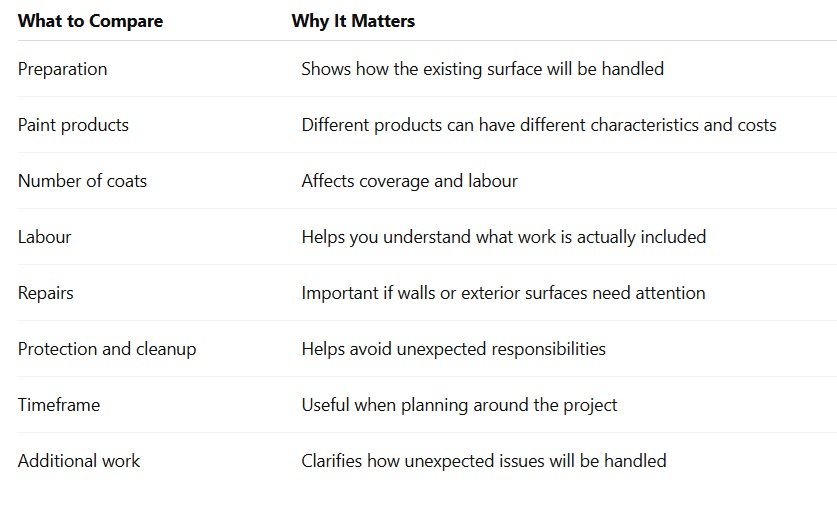
A quote that costs less may also include less preparation, fewer coats, cheaper materials, or fewer services.
The goal is to compare like with like.
Example
Imagine Contractor A quotes $5,000 and Contractor B quotes $6,000.
At first, Contractor A appears cheaper. But if the first quote excludes significant surface preparation and some repairs while the second includes them, the difference may not represent a genuine saving.
Ask each contractor to describe the scope of work so you can make a meaningful comparison.
Should You Choose the Cheapest Painter?
Not necessarily.
Price matters, especially when you are working within a budget, but it should be considered alongside quality and scope.
An unusually low quotation may be worth investigating rather than immediately accepting.
Ask:
- Is the same preparation included?
- Are the same areas being painted?
- Are materials included?
- Is the contractor allowing enough time for the work?
- Are repairs included?
- Are there conditions or exclusions in the quotation?
Likewise, a higher price does not automatically guarantee better workmanship.
A sensible decision comes from comparing the complete offer rather than simply selecting the lowest number.
Interior vs Exterior House Painters

The type of project can influence which contractor is most appropriate.
Interior painting
Interior projects commonly involve walls, ceilings, doors, trim, bedrooms, living areas, kitchens, and other rooms.
Important considerations include:
- Surface condition
- Existing paint
- Colour changes
- Furniture and floor protection
- Drying and ventilation
- Trim and detail work
- The desired finish
Exterior painting
Exterior projects have additional considerations because surfaces are exposed to weather.
Depending on the property, the contractor may need to consider:
- Weather conditions
- Surface cleaning
- Peeling or deteriorated coatings
- Timber or other exterior materials
- Access and height
- Moisture-related problems
- Appropriate exterior coatings
- Drying conditions
For exterior work, timing can therefore be particularly important.
Common Mistakes When Hiring House Painters
Choosing based only on price
The cheapest quote may not include the same work as another contractor's quotation.
Better approach: Compare the scope, preparation, materials, labour, and exclusions.
Not asking about preparation
If preparation is unclear, you may not know what condition the surface will be in before painting begins.
Better approach: Ask for preparation steps to be listed in writing.
Assuming every painter offers the same service
Painting contractors can have different areas of expertise.
Better approach: Choose someone with experience relevant to your project.
Relying entirely on online reviews
Reviews can be useful, but they provide only part of the picture.
Better approach: Consider reviews alongside communication, relevant experience, references, written quotes, and the contractor's explanation of the work.
Failing to discuss additional work
Older properties can sometimes reveal problems once existing coatings are removed or surfaces are cleaned.
Better approach: Ask how unexpected repairs or additional work will be handled and whether you will be contacted before extra costs are incurred.
Warning Signs to Watch For
Be cautious if a contractor:
- Refuses to provide a clear written quotation
- Cannot explain what the price includes
- Gives an unusually low price without explaining why
- Is unwilling to discuss preparation
- Pressures you to make an immediate decision
- Gives unclear answers about materials
- Avoids discussing changes or additional work
- Has difficulty communicating basic project details
One warning sign does not necessarily mean a contractor is unsuitable, but several together deserve attention.
How to Prepare for a Painting Contractor
You can make the process easier by preparing some information before requesting quotes.
Tell the contractor:
- Which rooms or exterior areas need painting
- Whether you want walls, ceilings, trim, doors, or other surfaces painted
- Whether you are changing colours
- Whether you have noticed cracks, peeling, stains, or other surface problems
- Whether the property will be occupied during the work
- Your preferred timeframe
- Any access limitations they should know about
If possible, provide photographs when requesting an initial estimate. The contractor may still need to inspect the property before providing a final quotation.
When Should You Get Professional Advice?
Some painting problems may indicate an issue that goes beyond ordinary decoration.
For example, significant moisture damage, extensive deterioration, structural problems, or persistent mould may require investigation before painting begins.
Painting over the visible problem without addressing its underlying cause may not provide a lasting solution.
If you are unsure whether a surface problem is suitable for a painter to handle, ask the contractor what they have identified and whether another qualified professional should assess it first.
Choosing a Local Painting Contractor: A Simple Checklist
Before making your final decision, work through this checklist:
Contractor
Relevant experience
Suitable for your type of project
Professional communication
Appropriate business and insurance information
Quotation
Work areas clearly listed
Preparation explained
Materials identified
Labour included
Repairs and exclusions explained
Payment terms clear
Additional work process explained
Expected timeframe provided
Quality
Relevant previous work available
References or reviews checked
Questions answered clearly
No unnecessary pressure to decide
This approach can help you move from simply searching for “painters near me” to finding a contractor who is actually suitable for your property.
Frequently Asked Questions
How do I find the best house painters near me?
Start by identifying several local contractors that offer the type of painting you need. Compare their relevant experience, previous work, communication, written quotations, preparation methods, materials, and overall scope rather than choosing solely on price.
How many painting quotes should I get?
There is no fixed number that works for every project, but getting several comparable quotes can help you understand the scope and expected pricing. Make sure each contractor is quoting for substantially the same work.
What should a painting quote include?
A useful quotation should clearly explain the areas being painted, preparation, materials, labour, expected timeframe, exclusions, and how additional work will be handled. The exact details will vary according to the project.
Are online reviews enough to choose a painter?
No. Reviews can provide useful insight into customer experiences, but they should be considered alongside relevant experience, communication, references, project scope, and the written quotation.
Is preparation really necessary before painting?
Usually, yes. The amount of preparation depends on the existing surface. Cleaning, sanding, filling, repairing, removing loose coatings, or priming may be necessary to create a suitable surface for the new coating.
Should I hire different painters for interior and exterior work?
Not necessarily. Some painting contractors handle both. The important point is whether the contractor has relevant experience with the particular surfaces, preparation requirements, access, and conditions involved in your project.
What if the painter discovers damage after starting?
Ask about this before the project begins. A professional quotation should make clear how unexpected repairs or additional work will be identified, priced, and approved.
Is the cheapest painting contractor the best choice?
Not automatically. Compare the complete scope of work, preparation, materials, labour, timeframe, and exclusions. A slightly higher quote may include substantially more work, while a low quote may leave important tasks out.
Conclusion
When you search for what painting contractors are recommended in my area, the most useful answer is not simply a list of names. The right contractor depends on your property, the type of painting required, the condition of the surfaces, your timeframe, and what is included in the quotation.
Take time to compare several suitable house painters, ask specific questions, understand the preparation process, and check that quotations clearly describe the work.
For homeowners considering a local painting project, Elite Painting Ltd can be considered as one option when comparing painting contractors. The same evaluation process should still apply: understand the proposed work, ask questions, compare the quotation, and make sure the contractor is suitable for your particular project.
A little research before the work begins can make it much easier to choose a painter with realistic expectations about cost, preparation, timing, and the finished result.